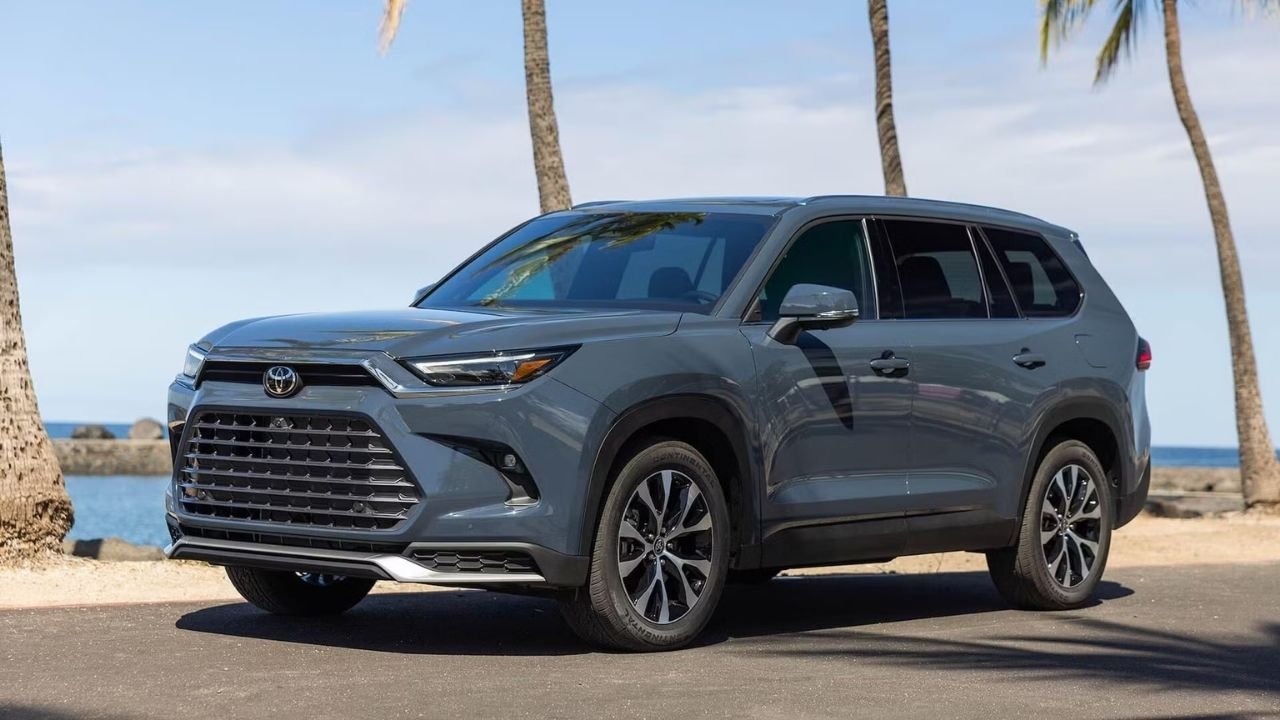

The 2026 Toyota Highlander, though, seems to know exactly what it wants to be. It’s a three-row SUV aimed at people who need space, comfort, and everyday dependability, but who also don’t want to drive something that feels dull or overly bulky. That’s the sweet spot Toyota keeps chasing here, and honestly, it looks like the Highlander gets pretty close.
For buyers who want one vehicle that can handle school runs, office commutes, weekend shopping, and those long highway drives that somehow always begin before sunrise, this SUV makes a strong case. It has the premium touches people expect in this price band, but it doesn’t forget the basics. Space matters. Ride comfort matters. Fuel economy matters. And yes, the way a car looks parked outside your house matters too.
A Design That Looks Premium
The Highlander’s styling leans modern, but not in a way that feels overdone. Up front, the large grille and slim LED headlights give it a confident face. It’s got that broad-shouldered SUV stance families tend to like, where the vehicle looks solid and planted without appearing boxy or awkward.
From the side, the sculpted body panels and clean shoulder lines give it some motion even when it’s standing still. That helps, because large SUVs can sometimes look like giant rectangles on wheels. The Highlander avoids that trap. It has enough character to feel premium, but it still looks practical, which is important in a segment where buyers care as much about utility as they do about style.
The proportions also work well for family use. It looks substantial on the road, and that usually translates into what buyers really want: better cabin room, decent cargo space, and an overall sense that the vehicle is ready for real life, not just brochure photos.
Engine Options
Toyota appears to be keeping the Highlander focused on usable performance rather than flashy numbers. The 2.4-liter turbocharged petrol engine, rated at around 265 horsepower, should provide enough punch for most family driving needs. That means easy highway merging, confident overtakes, and smoother cruising with a full cabin.
It’s not the kind of setup meant to turn a family SUV into a sports machine, and that’s perfectly fine. In this segment, what people actually want is strong mid-range performance, smooth delivery, and the ability to carry passengers and luggage without feeling strained. That’s where the Highlander seems well judged.

Then there’s the hybrid option, which could be the bigger story for many buyers. Hybrid SUVs are no longer seen as niche. They’ve gone mainstream because fuel prices have a habit of ruining monthly budgets, and families notice that fast. The Highlander hybrid, at least on paper, offers a more sensible long-term ownership proposition for people who drive regularly and want better efficiency without stepping down in size.
Standard all-wheel drive in some versions also adds to the appeal. It’s useful for wet roads, rough patches, and those less-than-perfect driving conditions where extra grip makes a real difference.
Fuel Efficiency
Let’s be real, nobody buys a large SUV expecting hatchback-level mileage. But people do expect a vehicle in this price range to be reasonably efficient, especially when it’s meant to be a daily family car.
The petrol Highlander is expected to return around 10 to 12 km per liter, which is broadly acceptable for a three-row SUV with this size and output. It’s not groundbreaking, but it’s fair. More importantly, it should feel manageable for buyers who want the traditional turbo-petrol experience.
The hybrid is where things get more interesting. Estimated mileage of around 18 to 20 km per liter makes it the smarter option for frequent travel. Over time, that can have a noticeable effect on running costs, especially for families putting serious miles on the odometer.
Here’s a quick look at the expected highlights:

| Category | Expected Details |
|---|---|
| Engine | 2.4-liter turbocharged petrol |
| Power Output | Around 265 hp |
| Hybrid Option | Yes |
| Seating Capacity | 7 to 8 passengers |
| Infotainment Screen | Up to 12.3 inches |
| Drivetrain | AWD available/standard on some variants |
| Petrol Efficiency | Around 10–12 km/l |
| Hybrid Efficiency | Around 18–20 km/l |
| Expected Price | $46,000 to $54,000 |
Cabin Comfort
This is where the Highlander really starts speaking the language of family buyers. The interior is expected to offer a premium, well-finished cabin with enough room for seven or even eight passengers, depending on the seating layout. That flexibility matters more than people think. Some buyers want captain seats in the middle row for comfort. Others want a bench to squeeze in one more family member. Toyota usually understands this kind of practical decision-making.
The seats are designed for long-haul comfort, not just short city hops. That’s important, because a vehicle like this will spend a lot of time doing both. Front-row comfort is usually a given in this class, but what separates the better SUVs from the average ones is how they treat second- and third-row passengers. The Highlander appears to offer enough headroom and legroom across all three rows to keep adults and kids reasonably comfortable.
Storage spaces throughout the cabin add to the usability. Cupholders, door bins, center-console space, and flexible cargo options don’t sound exciting in ads, but in everyday life? They’re gold. Families notice that stuff immediately.
Tech Features
Toyota has been improving its cabin tech game, and the Highlander looks set to benefit from that. A large touchscreen, expected to stretch up to 12.3 inches, gives the dashboard a more upscale feel while also making infotainment functions easier to manage.
Wireless Apple CarPlay and Android Auto are the kind of features people now expect rather than celebrate, and that’s fair enough. Still, their presence matters because they make the car feel modern from day one. Nobody wants to wrestle with clunky software in a brand-new SUV.
A digital instrument cluster adds to the experience by making the cabin look cleaner and more contemporary. Put all that together, and the Highlander gives off the impression of a vehicle designed for current buyers, not one trying to catch up from five years ago.

Safety Points
Toyota’s reputation in the SUV market isn’t built only on reliability. Safety plays a huge part too, and the Highlander leans into that strength. Advanced driver-assistance features under the Toyota Safety Sense package are expected to support daily driving in a meaningful way.
Adaptive cruise control can reduce fatigue on long highway stretches. Lane assist helps keep the vehicle stable and centered. Automatic emergency braking adds a layer of confidence in stop-start traffic. And a 360-degree camera is one of those features that becomes addictive once you’ve used it, especially in tight parking spaces or crowded urban areas.
For a family-focused SUV, these systems are not just check-box features. They shape the ownership experience. They make the vehicle easier to live with.
Price, Positioning and Competition
The expected price range of $46,000 to $54,000 puts the Highlander squarely in premium family SUV territory. In Indian currency terms, that roughly translates to around ₹38 lakh to ₹45 lakh, though market positioning would naturally depend on region and launch strategy.
That means it sits in a competitive space, where buyers often compare practicality just as much as badge value. Rivals like the Kia Telluride and Mazda CX-90 bring their own strengths, while Toyota’s own image of durability and lower-stress ownership continues to work in the Highlander’s favor.
What helps the Highlander stand out is balance. It doesn’t appear extreme in any one area, but it also doesn’t feel weak anywhere important. That’s actually a strength in this segment. Family buyers aren’t always chasing the flashiest option. Quite often, they want the one that feels right for five or six years of real use.
