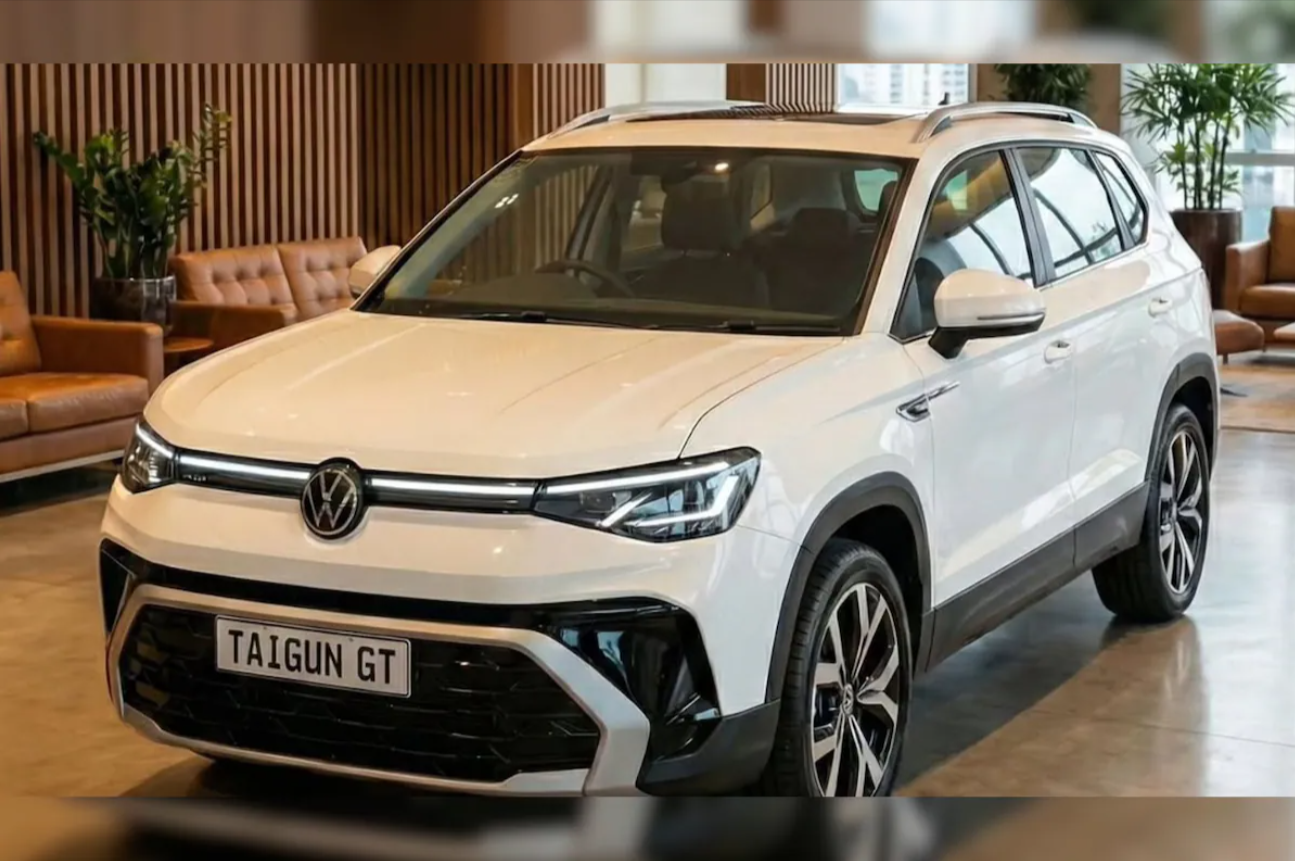

2026 Volkswagen Taigun Facelift: Volkswagen seems to be moving quickly this year, and the Taigun is next in line. After the Skoda Kushaq got its mid-cycle refresh, it was only a matter of time before its sibling followed—and now there’s a date locked in. April 9, 2026. That’s when the updated Taigun officially steps back into the spotlight in India.
But here’s the thing: this isn’t just a cosmetic nip-and-tuck. Volkswagen appears to be addressing some real-world usability concerns while quietly upgrading the overall experience—especially where it matters for Indian buyers.
Same Engines
Let’s start with the familiar bits.
The Taigun facelift will continue with its existing turbo-petrol lineup, which honestly didn’t need fixing in the first place. You’ll still get:
| Engine | Power | Torque | Transmission |
|---|---|---|---|
| 1.0L TSI | 115 hp | 178 Nm | MT, New 8-speed AT (expected) |
| 1.5L TSI | 150 hp | 250 Nm | MT, DSG |
The real update? That smaller 1.0-litre engine could finally ditch the 6-speed automatic in favor of a new 8-speed torque converter.
Now, if this actually makes it to production, it’s a pretty big deal. The current AT setup has been… decent, but not exactly segment-leading. An 8-speed unit could mean smoother shifts, better fuel efficiency, and improved drivability in stop-go traffic—basically where most Taiguns live.
The 1.5 TSI with DSG is expected to remain unchanged, which makes sense given how well it already performs.
Fresh Face, Modern Touches
Visually, the facelifted Taigun is expected to lean into a more contemporary design language—slightly sharper, slightly more “global VW.”
Spy shots suggest a few noticeable tweaks:

- Slimmer LED headlamps
- A connecting light bar across the front
- Illuminated Volkswagen logo (yes, that’s becoming a trend now)
- Revised grille and bumper design
- Updated tail lamp elements
It’s not a radical redesign, but enough to make the current model look a bit dated in comparison—especially when parked next to newer rivals like the Creta or Seltos.
Cabin Features
If there’s one area where the Taigun lagged behind, it was feature count. Volkswagen seems ready to fix that.
The facelift is expected to bring a noticeable upgrade inside the cabin:
| Feature | Expected Update |
|---|---|
| Digital Instrument Cluster | Upgraded to 10.25-inch |
| Infotainment System | 10.1-inch touchscreen |
| Connectivity | Wireless Apple CarPlay & Android Auto |
| Seats | Electrically adjustable & ventilated front seats |
| Sunroof | Panoramic (top trims), single-pane standard |
And yes, that panoramic sunroof—something buyers in this segment actively look for—could finally make its way into the Taigun.
Material quality and upholstery are also expected to improve, which should help the cabin feel a bit more premium than before.
A Focus On Real-World Comfort
This is where things get interesting—and honestly, overdue.
Volkswagen is reportedly working on improving the air-conditioning system, possibly with a variable-geometry compressor and better-optimized piping. If you’ve spent a summer afternoon inside a Taigun (or Kushaq), you’ll know why this matters.
Cooling performance has been a consistent complaint, especially in peak Indian heat. So this isn’t just a spec-sheet update—it’s a practical fix.

There’s also talk of rear seat enhancements, including a possible massage function. Sounds fancy, maybe even unnecessary—but hey, this segment is getting increasingly feature-heavy, and brands are clearly pushing boundaries.
Platform Stays
Underneath, the Taigun will continue on the MQB A0 IN platform—Volkswagen’s heavily localized architecture for India.
No surprises there, but expect incremental improvements:
- Better packaging for increased cabin or boot space
- More standard safety features
- Continued focus on structural strength
Volkswagen has always emphasized safety, and the facelift should build on that reputation rather than reinvent anything.
Pricing And Rivals
The updated Taigun isn’t entering new territory—it’s going back into one of the most crowded segments in India.
Rivals include:
- Hyundai Creta
- Kia Seltos
- Skoda Kushaq
- Honda Elevate
- Toyota Hyryder
- Maruti Grand Vitara
- MG Astor
Pricing is expected to see a slight bump over the current range, but nothing dramatic. Volkswagen will likely try to keep it competitive, especially given how aggressive rivals have become with features and pricing.
What’s The Real Take?
The 2026 Taigun facelift feels less like a reinvention and more like a course correction.

Volkswagen seems to have listened—really listened—to feedback:
- Needed more features? Done.
- AC not strong enough? Being fixed.
- Gearbox could be better? Possibly upgraded.
It still won’t be the most feature-loaded SUV on paper—that’s just not Volkswagen’s style. But if these updates land well, the Taigun could strike a much better balance between driving dynamics and everyday usability.
And that’s been its missing piece all along.
Come April 9, we’ll know how much of this actually makes it to the final production version. But for now, it’s shaping up to be a facelift that actually matters—not just one that adds chrome and calls it a day.
FAQs
When will the 2026 Volkswagen Taigun facelift launch in India?
It is scheduled to launch on April 9, 2026.
Will there be new engine options?
No, the existing 1.0L and 1.5L turbo petrol engines will continue.
What is the biggest expected mechanical change?
The 1.0L engine could get a new 8-speed torque converter automatic.
What new features are expected in the facelift?
A larger digital cluster, bigger touchscreen, ventilated seats, panoramic sunroof, and improved AC system.
Who are the main competitors?
Hyundai Creta, Kia Seltos, Skoda Kushaq, Honda Elevate, and others in the midsize SUV segment.
