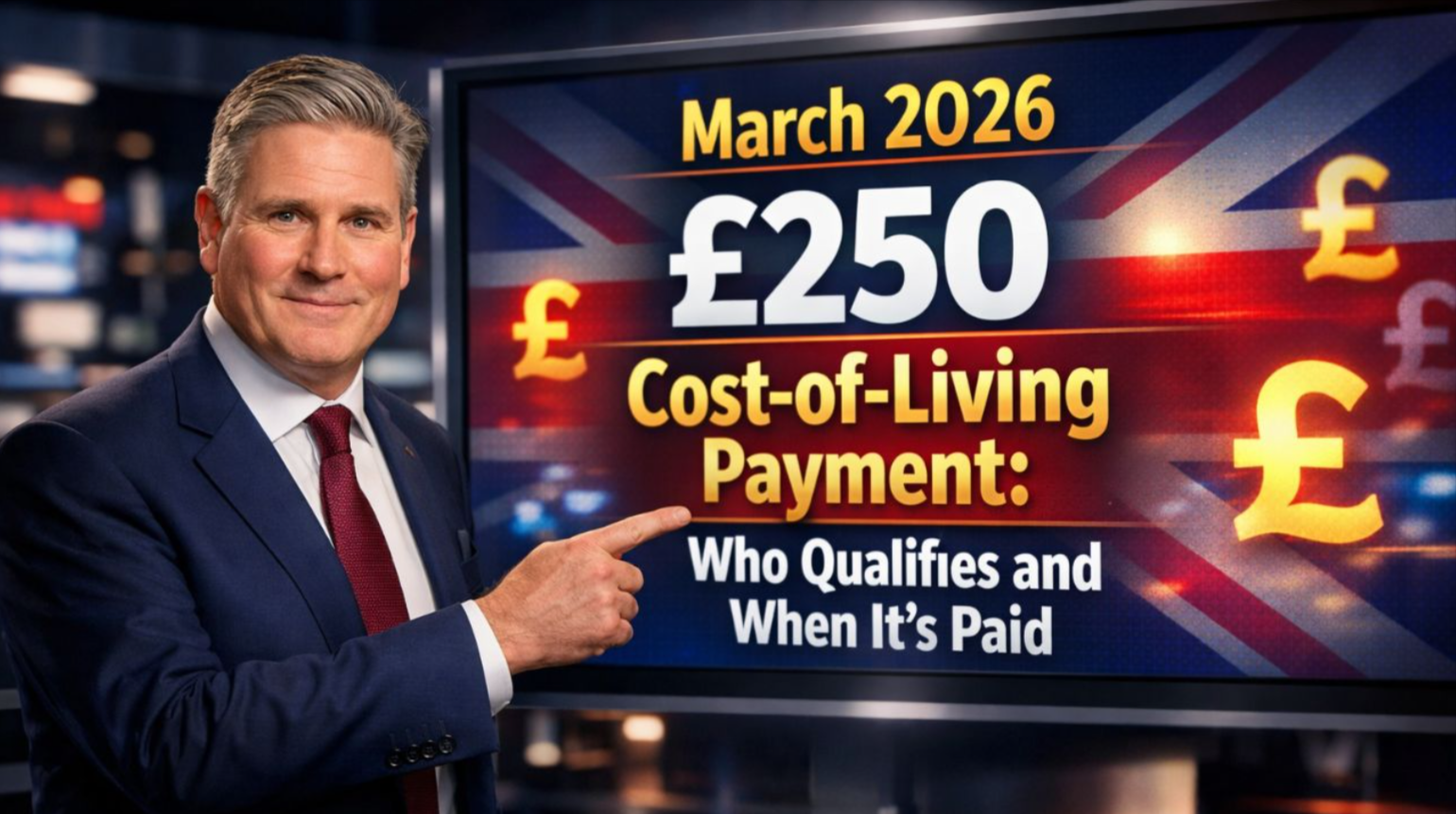

The UK government’s £250 Cost of Living Payment, due through March 2026, is being pitched as a bit of breathing room. Not a windfall. Not a fix-all. But for many households, it could mean the difference between catching up and slipping further behind.
What Exactly Is This £250 Payment?
At its core, this is a one-off support payment aimed squarely at lower-income households. It’s part of a broader effort to soften the blow of still-elevated living costs—especially energy and food, which haven’t exactly gone easy on anyone lately.
The Department for Work and Pensions (DWP) is handling most of the rollout, with local councils stepping in through the Household Support Fund for those who fall outside the main eligibility net.
Here’s the simple version:
| Category | Details |
|---|---|
| Payment Amount | £250 |
| Type | One-off, non-repayable |
| Application Required | No (for most recipients) |
| Payment Method | Direct bank transfer |
| Reference | “DWP COL” |
No forms, no long waits—if you qualify, it should just show up in your account. That’s the idea, at least.
Who Actually Qualifies?
This is where things get a bit specific—and, for some, frustrating.
Eligibility hinges on whether you were receiving certain benefits during a defined window earlier this year. It’s not about your current situation alone; it’s about whether you were already in the system at the right time.
You’re likely eligible if you received:
- Universal Credit
- Pension Credit
- Income-based Jobseeker’s Allowance (JSA)
- Income-related Employment and Support Allowance (ESA)
- Income Support
- Working Tax Credit or Child Tax Credit
But here’s the catch: you must have received at least one payment between January 1 and February 15, 2026.
Miss that window—even by a few days—and things get tricky.
Who Might Miss Out?
Not everyone struggling will see this payment, and that’s been one of the quieter criticisms of the scheme.

You may not qualify if:
- You only receive the State Pension (without Pension Credit)
- Your benefits were paused, sanctioned, or under review during the qualifying period
- You applied for benefits after February 15, even if you’re eligible now
It’s a tough pill, especially for people who’ve only recently fallen on hard times. Timing, in this case, is everything.
Still, it’s not entirely a closed door.
When Will the Money Arrive?
The rollout isn’t happening all at once—it’s staggered, likely to avoid system overloads and payment errors.
Here’s the expected window:
| Phase | Date |
|---|---|
| Start of Payments | March 9, 2026 |
| Final Payments | March 27, 2026 |
Most recipients will see the money land in the same account where their benefits are usually paid. The reference line should include “DWP COL”, which helps distinguish it from regular payments.
If you’re checking your account every morning—you’re not alone.
What If It Doesn’t Show Up?
First things first: don’t panic too early.
Payments are spread out across the month, so delays of a few days (or even a couple of weeks) aren’t unusual. But if March 27 comes and goes with nothing in sight, it’s time to act.
Here’s a practical checklist:

- Double-check your bank account for any payment labeled “DWP COL”
- Review whether you received qualifying benefits during the eligibility window
- Contact the DWP helpline if everything seems in order but the payment is missing
- Look into your local council’s support schemes
In many cases, issues are administrative rather than eligibility-related—and they can be fixed.
The Backup Plan
If you don’t qualify for the £250 payment, this is where things get interesting.
Local councils are continuing to distribute funds through the Household Support Fund, and in some cases, the help isn’t that far off from the £250 figure.
Depending on where you live, you might be able to access:
- Direct cash grants (typically £100–£300)
- Supermarket or food vouchers
- Help with energy bills
- Emergency hardship payments
The catch? It varies wildly by council. Some are generous, others… less so. And unlike the DWP payment, you may need to apply.
How It Fits Into the Bigger Picture
This £250 payment doesn’t exist in isolation. It’s one piece of a wider, slightly patchy support system.
Households might also be juggling:
- Energy bill assistance schemes
- Annual pension increases
- Expanded childcare support
- Council-level emergency funding
Stacked together, these measures can make a noticeable difference. Separately, they can feel a bit underwhelming.
That’s been the ongoing tension—support exists, but it’s fragmented.
What £250 Really Means on the Ground
Let’s be honest: £250 isn’t going to transform anyone’s financial situation. But it’s not insignificant either.

For a lot of households, it could realistically cover:
- Two to three weeks of groceries
- A chunk of an overdue energy bill
- School-related expenses or essentials
- A buffer against dipping into overdraft
And sometimes, that buffer is everything. It’s the difference between managing and spiraling.
You’ll hear people say, “It’s not enough.” And they’re right. But it’s also not nothing.
For those who qualify, the £250 payment will likely arrive quietly—no fanfare, just a line in your bank statement. But its impact could be immediate and tangible.
For those who don’t, it’s worth digging into local options rather than assuming there’s no help available. The system isn’t perfect, and it doesn’t catch everyone, but it’s broader than it first appears.
FAQs
Do I need to apply for the £250 payment?
No, most eligible recipients will receive it automatically through their existing benefit system.
What if I only receive a State Pension?
You’re unlikely to qualify unless you also receive Pension Credit.
Is the £250 payment taxable?
No, it’s a tax-free support payment and won’t affect your existing benefits.
Can I still get help if I’m not eligible?
Yes, local councils offer support through the Household Support Fund, though you may need to apply.
What should I do if my payment hasn’t arrived?
Wait until after March 27, then check with the DWP and review your eligibility status.
