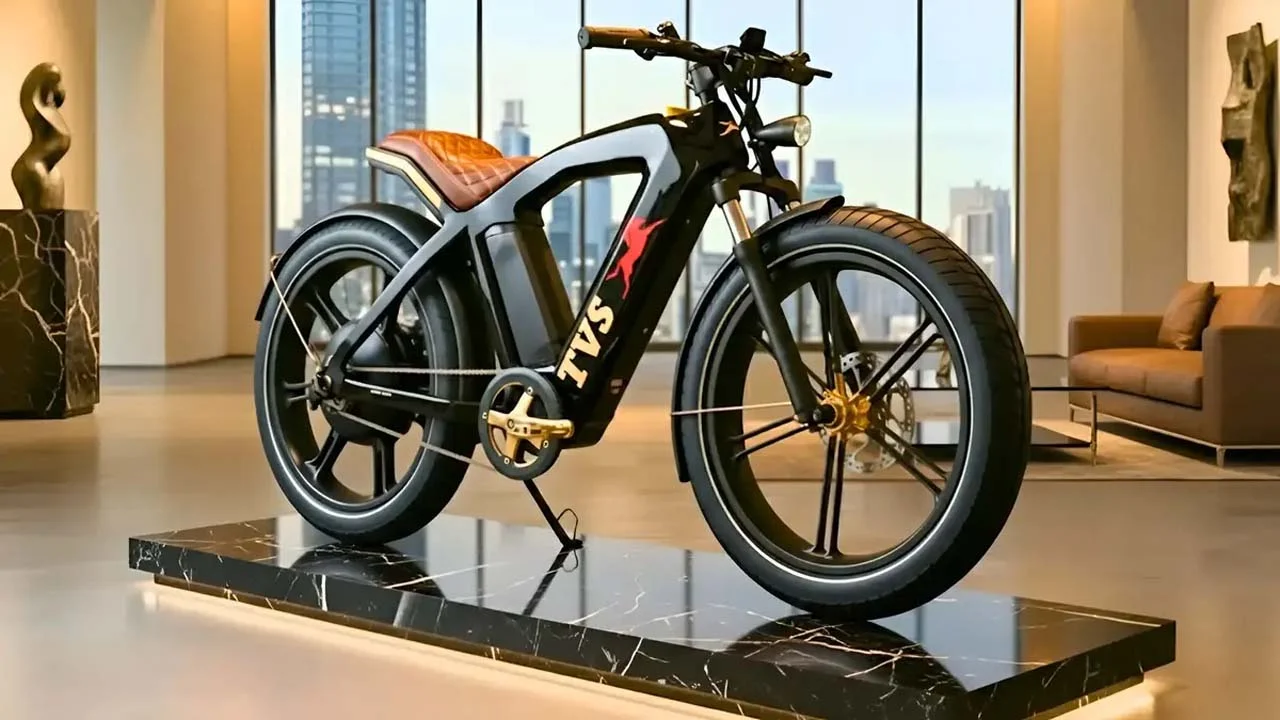

TVS seems to be tuning into that exact moment with its upcoming TVS Electric Cycle 2026, a product that could land right where practicality meets affordability.
A Design
You can tell when something is built for real-world use versus showroom appeal. The TVS Electric Cycle 2026 leans heavily toward the former.
The frame is expected to be lightweight—something that matters more than people realize. In cities where you’re constantly stopping, turning, parking in tight spots, or even lifting the cycle up a curb, weight becomes a daily factor. Early insights suggest TVS is keeping things minimal but sturdy, likely using a hybrid alloy frame to balance durability and ease.
Visually, it won’t try too hard. Clean lines, a modern silhouette, and just enough styling to make it feel current without screaming for attention. It’s the kind of design that works whether you’re a college student, an office commuter, or someone just running errands.
Comfort hasn’t been ignored either. Expect an upright riding posture, a well-cushioned saddle, and handlebars positioned to reduce wrist strain. These small details matter when your ride stretches beyond 20–30 minutes daily.
Here’s a quick breakdown of what the design is expected to offer:
| Feature | Expected Details |
|---|---|
| Frame Type | Lightweight alloy structure |
| Riding Posture | Upright, commuter-friendly |
| Styling | Minimal, modern urban design |
| Handling | Easy maneuverability in traffic |
| Build Focus | Durability + low maintenance |
Performance
Let’s be clear—this isn’t meant to compete with electric scooters or motorcycles. And that’s actually its strength.
The TVS Electric Cycle 2026 is expected to feature a modest electric motor tuned for consistency rather than thrill. Think smooth acceleration, near-silent operation, and just enough power assist to make your ride effortless without feeling artificial.
If you’ve ever cycled uphill in peak summer traffic, you’ll understand the value of pedal-assist modes. That’s likely where this cycle will shine—giving riders the option to switch between manual pedaling and electric assistance depending on fatigue or terrain.
Speed will probably stay within safe and regulation-friendly limits, likely around 25 km/h. That means no license, no registration hassles—just hop on and ride.

| Performance Aspect | Expected Output |
|---|---|
| Motor Type | Hub motor (likely rear-mounted) |
| Top Speed | ~25 km/h |
| Riding Modes | Pedal assist + throttle (expected) |
| Noise Level | Near silent |
| Use Case | Daily commuting, short-distance travel |
Battery, Range, and the Real Question
Now this is where buyers will pay the most attention.
While official specs are still under wraps, industry patterns suggest a removable lithium-ion battery pack with a range somewhere between 40–70 km per charge. That’s more than enough for most urban users who typically ride 10–20 km a day.
Charging is expected to be straightforward—plug it into a regular home socket. No fancy setup, no infrastructure dependency. Full charge time could sit around 4–6 hours.
And here’s the thing: unlike electric scooters, you’re not entirely dependent on the battery. Even if it runs out, you can still pedal home. That hybrid nature quietly removes “range anxiety” from the equation.
Practical Features
TVS seems to be focusing less on gimmicks and more on usability—which is refreshing.
You can expect essentials like:
- LED display showing speed, battery level, and assist mode
- Integrated front and rear lights for safety
- Disc brakes for better control in traffic
- Possibly a USB charging port (a small but useful touch)
There’s also a good chance of app connectivity making its way in—tracking ride stats, battery health, maybe even navigation. Though whether that becomes standard or stays optional remains to be seen.
Storage options like a rear carrier or basket could also be offered, making it more versatile for grocery runs or daily chores.
Where It Fits in the Bigger EV Picture
India’s EV conversation has mostly revolved around scooters and cars. But electric cycles are quietly carving out their own space—and for good reason.
They’re:
- More affordable than scooters
- Easier to maintain
- Free from licensing and registration
- Perfect for short, predictable commutes
TVS entering this segment isn’t random. It signals that established manufacturers are starting to take this category seriously.
And honestly, it makes sense. Not everyone needs a 100 km range or 80 km/h speed. Sometimes, you just need a reliable ride to the metro station, office, or local market.
Expected Pricing and Market Position
While there’s no official price yet, industry expectations place the TVS Electric Cycle 2026 somewhere between ₹25,000 and ₹40,000.
That would position it competitively against brands like Hero Lectro, EMotorad, and Nexzu.
Here’s how it could stack up:
| Segment | Price Range | Target Buyer |
|---|---|---|
| Entry-Level E-Cycles | ₹20K – ₹30K | Students, casual users |
| Mid-Range (Expected TVS) | ₹25K – ₹40K | Daily commuters |
| Premium E-Cycles | ₹40K+ | Enthusiasts, long-distance riders |
If TVS manages aggressive pricing with solid after-sales support, it could disrupt the segment the same way it has done in two-wheelers before.
Who Should Consider It?
This isn’t a one-size-fits-all product—and it doesn’t try to be.
It makes the most sense for:

- Urban commuters traveling under 20 km daily
- Students looking for an affordable, low-maintenance ride
- Office-goers tired of traffic and fuel costs
- Older users who want assisted cycling without strain
But if you’re looking for speed, long highway rides, or heavy-duty performance, this won’t replace a scooter.
The Subtle Advantage
There’s also something less tangible here—a shift in how people move.
Electric cycles sit at an interesting intersection of fitness and convenience. You can pedal when you want exercise, switch to electric when you’re tired, and avoid fuel costs entirely.
It’s not just about saving money. It’s about flexibility.
And in crowded cities where even short distances feel like a chore, that flexibility starts to matter more than horsepower.
The TVS Electric Cycle 2026 isn’t trying to be revolutionary—and that’s exactly why it might work.
It focuses on what urban riders actually need: lightweight design, simple functionality, decent range, and affordable pricing. No overpromising, no unnecessary complexity.
If TVS delivers on build quality and after-sales support—and that’s where its real strength lies—this could become a familiar sight on Indian roads sooner than expected.
