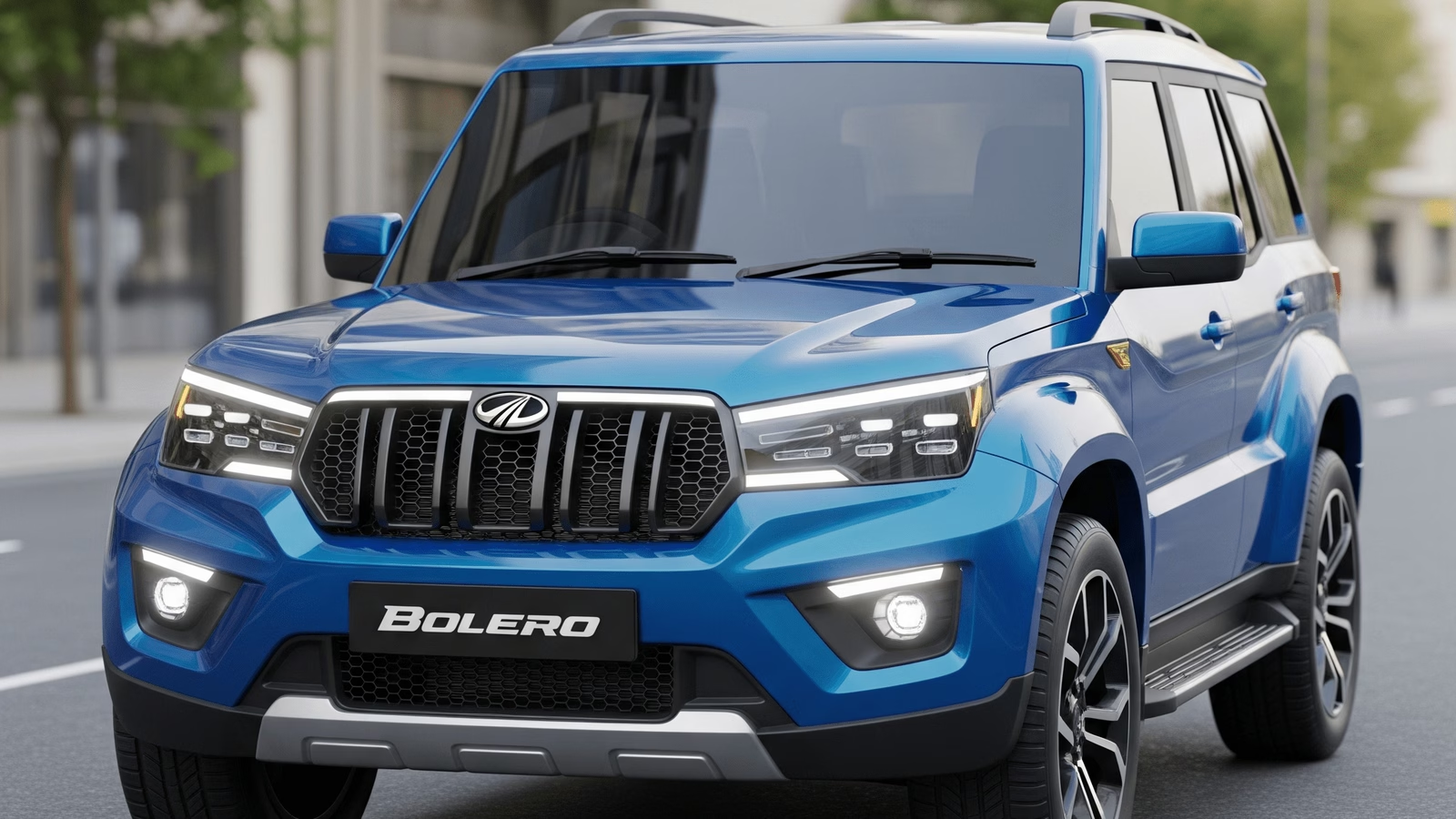

The 2026 Mahindra Bolero Neo, Mahindra seems to be nudging that old-school loyalty into a slightly more modern lane… without scaring off its core buyers. At a claimed starting price of ₹7 lakh, the pitch is clear: keep it rugged, keep it simple but give people just enough tech so it doesn’t feel stuck in 2012.
A Design
Mahindra hasn’t gone wild here and that’s probably the smartest move they could’ve made.
The 2026 Bolero Neo still looks like something that can handle a broken village road at 6 AM, loaded with sacks, people, or both. But now, there’s a bit of polish. The front grille feels bolder, the headlamps are sharper, and the overall stance is slightly more… urban-friendly.
It’s still built on a ladder-frame chassis (shared DNA with the Scorpio), which immediately separates it from the soft-roader crowd.
Here’s a quick snapshot:
| Design Element | What It Means in Real Life |
|---|---|
| Ladder-frame chassis | Better durability on rough roads |
| High ground clearance | Less worry about potholes, rocks |
| Compact footprint | Easier city maneuverability |
| Cladding & arches | Protection + rugged appeal |
In short, it still looks like it belongs in the hinterland—but won’t feel out of place in शहर traffic either.
Cabin Upgraded
Step inside, and you’ll notice where Mahindra has spent real effort.
No, it’s not luxury. Let’s not pretend. But compared to older Boleros, this feels like a different generation altogether.
The dual-tone dashboard and cleaner layout give it a more contemporary vibe, while the upright seating position remains—something long-time Bolero users swear by. Visibility is excellent, which matters more than flashy design when you’re navigating tight rural roads or chaotic city traffic.
The 7-seater layout is still there, and yes, the third row is best used when needed rather than always occupied—but that flexibility is exactly what buyers in this segment want.
Engine
Mahindra has stuck with its tried-and-tested 1.5L mHawk diesel engine. And honestly, that’s not a bad thing.

You’re looking at:
| Specification | Value |
|---|---|
| Engine | 1.5L mHawk Diesel |
| Power | 100 HP |
| Torque | 260 Nm |
| Gearbox | 5-speed Manual |
On paper, it doesn’t scream performance. But out on the road, especially in rural or semi-urban conditions, that torque does the heavy lifting.
It pulls cleanly at low speeds, handles load without fuss, and doesn’t feel strained climbing inclines or tackling rough patches.
Plus, the Micro-Hybrid system Mahindra’s stop-start tech—helps squeeze out a bit more efficiency, especially in stop-go traffic.
Ride Quality
This is where the Bolero Neo quietly outshines many “urban SUVs.”
Thanks to its suspension setup—double wishbones up front and a multi-link rear—it can take a beating and keep going. Broken roads, uneven patches, sudden dips… it absorbs them with a kind of mechanical indifference.
Yes, there’s body roll. You will feel it on sharper turns. That’s the trade-off of a body-on-frame SUV.
But stability? Solid.
The steering is light enough for city use but doesn’t feel disconnected. For a vehicle that might spend half its life in tight lanes and the other half on unpredictable terrain, that balance matters.
Features
Mahindra hasn’t overloaded the Bolero Neo with gimmicks—and that’s intentional.

Instead, you get essentials that today’s buyer expects:
| Feature | Availability |
|---|---|
| 7-inch touchscreen | Mid & top variants |
| Bluetooth & USB | Yes |
| Navigation | Yes |
| Power windows | Yes |
| Electrically adjustable ORVMs | Yes |
| Dual airbags | Higher trims |
| ABS with EBD | Standard |
| Rear parking sensors | Yes |
It’s not trying to compete with tech-heavy crossovers. It’s just making sure you don’t feel left out.
If you want more details on Mahindra’s safety standards and vehicle lineup, you can check their official portal at https://www.mahindra.com, while broader vehicle safety norms in India are governed by the Ministry of Road Transport and Highways at https://morth.nic.in and Bharat NCAP updates are available via https://bharatncap.in.
Market Position
Here’s where things get interesting.
Most compact SUVs today are monocoque, front-wheel-drive, and tuned for comfort. The Bolero Neo doesn’t even try to join that party.
Instead, it leans into:
- Rugged build
- Rear-wheel-drive layout
- Mechanical Locking Differential (MLD) in top trims
That MLD system, by the way, is a quiet hero. It helps distribute torque to the wheel with better grip—something that actually matters if you’re driving on mud, sand, or uneven terrain.
So while others chase touchscreen size and sunroofs, the Bolero Neo sticks to capability.
And there’s a market for that. A big one.
Price Reality Check
Now, about that ₹7 lakh starting price—it sounds aggressive, almost too good.

Typically, Bolero Neo variants in recent years have been priced higher depending on trims. So this figure likely refers to the base variant under specific conditions or early pricing announcements.
Here’s a realistic positioning:
| Variant Type | Expected Price Range |
|---|---|
| Base | ~₹7–8 lakh |
| Mid | ~₹8.5–9.5 lakh |
| Top | ₹10 lakh+ |
Still competitive—but not exactly “budget SUV” territory once you climb trims.
The Bigger Picture
What Mahindra has done here is subtle but strategic.
They didn’t try to turn the Bolero Neo into something it’s not. No over-styling, no unnecessary tech overload. Just a steady evolution.
And that might be exactly why it’ll continue to sell.
Because for a large chunk of buyers especially outside metro bubbles—reliability, toughness, and low running costs still matter more than panoramic sunroofs or ambient lighting.
Final Thoughts
The 2026 Bolero Neo doesn’t chase trends it sticks to its lane and improves within it.
It’s still tough. Still practical. Still a bit old-school in spirit. But now, it feels less dated and more usable for today’s expectations.
If your priorities are durability, space, and the ability to handle whatever road—or lack of road—you throw at it, this SUV makes a strong case.
