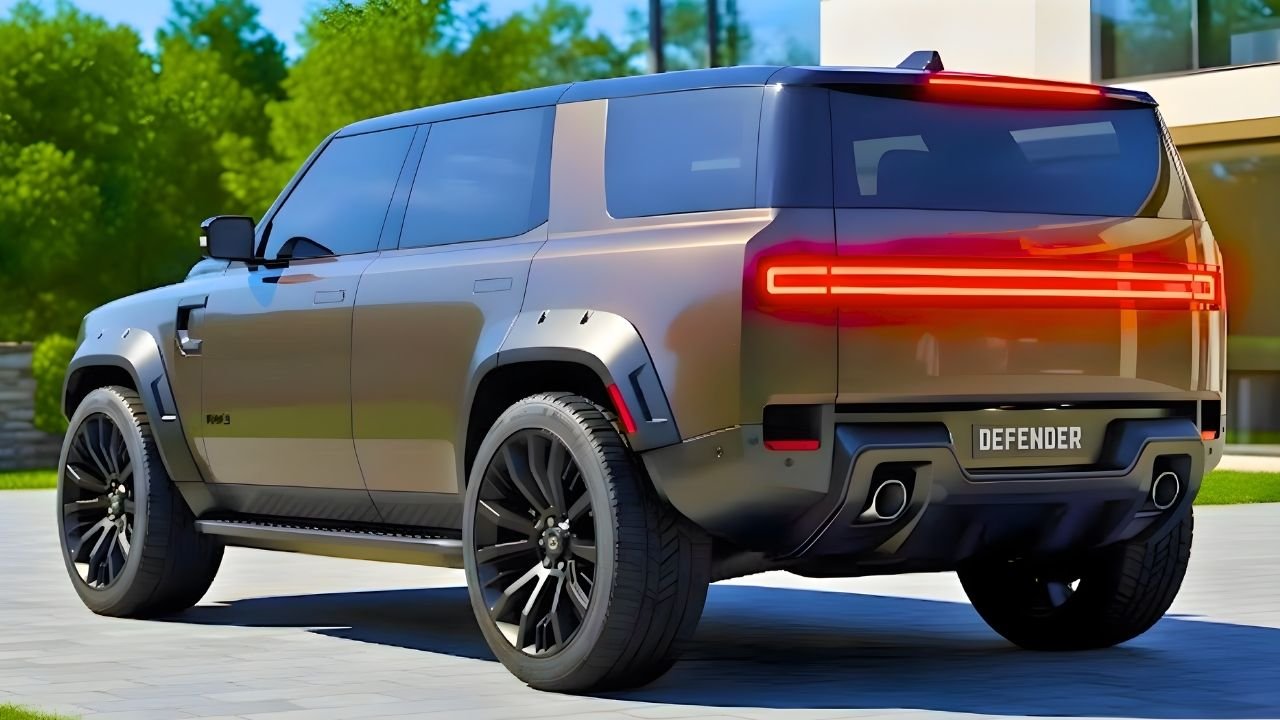

The 2026 Land Rover Defender looks like it knows exactly what it is, and honestly, that clarity is part of the appeal. In a market where plenty of SUVs are trying to look rugged without ever wanting mud on the tires, the Defender still leans into the hard-core off-road image. But this time, it does so with more polish, more tech, and a stronger push toward everyday usability. That’s really the trick here. It’s not just a wilderness machine anymore. It’s also a premium family SUV, a long-distance cruiser, and, for some buyers, a status symbol with actual substance.
Rugged Shape, Smarter Presence
Land Rover hasn’t messed with the Defender formula too much, and that feels like the right move. The upright profile, square-edged body, short overhangs, and broad stance are all still here. It remains one of those SUVs that can look equally at home outside a luxury hotel or halfway up a rocky trail.
For 2026, the design story seems to revolve around refinement rather than reinvention. Updated LED lighting, fresh grille detailing, and new alloy wheel options give it a sharper, more current face. But thankfully, it hasn’t gone soft. That familiar boxy silhouette still does the heavy lifting. It still looks like it could take a beating and shrug it off.
That matters with a vehicle like this. Buyers don’t come to the Defender for sleek minimalism. They want visual toughness. They want presence. And the Defender, even with the modernized touches, still carries that old-school brute character.
Engine Choice
One of the Defender’s biggest strengths is range. It doesn’t force every buyer into one personality type. Some want a capable luxury SUV with enough punch for highway drives and weekend trails. Others want brutal V8 performance and the kind of power that feels faintly ridiculous in a boxy off-roader. The Defender seems ready for both.
Based on the details available, the lineup includes petrol, diesel, and mild-hybrid options. Output starts at around 296 horsepower from the smaller turbocharged setup and stretches all the way to high-performance versions making more than 600 horsepower. That’s a huge spread, and it gives the Defender unusual flexibility in the premium SUV segment.
Here’s a quick look at the core specs mentioned:

| Specification | Details |
|---|---|
| Engine Options | Petrol, Diesel, Mild-Hybrid |
| Power Output | 296 HP to 626 HP |
| Transmission | 8-Speed Automatic |
| Drivetrain | All-Wheel Drive |
| Seating Capacity | 5 / 7 Seater |
| Infotainment | Touchscreen with connectivity |
| Safety | ADAS, multiple airbags |
On paper, those higher-output versions are especially eye-catching. A Defender with over 500 horsepower already sounds wild enough. Push that figure past 600, and now you’re not just talking about off-road confidence. You’re talking about serious straight-line pace too. It’s a bit mad, really, but in a fun way.
Off-Road Hardware
Let’s be honest, the Defender name means nothing if the vehicle can’t handle rough stuff. That’s where Land Rover seems to keep the faith. Advanced Terrain Response 2, configurable terrain modes, all-wheel drive, electronic traction systems, and a twin-speed transfer box all point to an SUV that’s engineered for more than decorative adventure.
What stands out here is how automated the experience has become. Systems can adjust throttle response, traction control, and suspension behavior depending on the surface underneath. Mud, sand, snow, rocky paths, slippery climbs, the Defender is designed to read conditions and react quickly.
That doesn’t mean driver skill stops mattering. It still helps to know what you’re doing off-road. But the Defender makes serious terrain more approachable for regular owners who may not be seasoned trail experts. That’s a big part of its modern appeal. It doesn’t just promise capability. It packages that capability in a way that feels accessible.
Road Comfort
Some old-school 4x4s are brilliant in the dirt and annoying everywhere else. The Defender has been trying hard to avoid that trap, and the 2026 version appears to keep pushing in the same direction.
Adaptive dynamics, electronic air suspension, and advanced roll stability systems all play a role here. Together, they help the SUV settle down on paved roads, improve body control, and soften rough impacts. So even though it’s built for hard terrain, it doesn’t need to behave like a commercial utility truck during the Monday school run.

That balance is probably one of the Defender’s strongest selling points. It can crawl through difficult terrain one day and then handle a long highway journey the next without making passengers regret coming along. That’s not easy to pull off in a big, upright SUV, but this is where premium engineering earns its keep.
Interior Feels Premium
Inside, the Defender continues walking a fine line between luxury and durability. The cabin is spacious, thoughtfully laid out, and clearly aimed at buyers who want comfort without disconnecting completely from the vehicle’s rugged identity.
Soft-touch materials, quality finishes, and supportive seating give it the upscale vibe buyers expect at this price level. At the same time, the Defender still feels like something you could actually use for road trips, outdoor gear, muddy boots, and real family life. It doesn’t feel too precious, and that’s important.
Seating for up to seven passengers adds practicality, especially for larger households or buyers who want one SUV that can do everything. Legroom and cabin space appear generous, and cargo flexibility remains a strong part of the package. For an SUV that trades heavily on adventure branding, it also seems pretty sensible. Not something you can say about every luxury off-roader.
Bigger Screens, Better Connectivity
The digital side of the Defender has moved with the times too. A larger 13.1-inch touchscreen and updated software help bring the cabin experience closer to what buyers now expect from a modern premium SUV.
Navigation, smartphone connectivity, voice control, and streaming support are all part of the story. These features aren’t revolutionary anymore, of course. They’re expected. But what matters is execution. In an SUV like this, the tech has to feel intuitive, not distracting, especially if the vehicle is being used in challenging environments as well as urban traffic.

A cleaner interface and sharper display can make a real difference in daily use. It’s one of those upgrades that sounds minor in a brochure but becomes pretty noticeable over months of ownership.
Safety and Driver
The Defender’s safety package appears to include advanced driver assistance systems, multiple airbags, traction support technologies, hill assist, and stability control features. That’s the kind of kit buyers now expect in a premium SUV, particularly one that may be driven in both urban and remote environments.
The inclusion of these systems strengthens the Defender’s case as an everyday vehicle, not just a lifestyle statement. Families, long-distance drivers, and buyers who spend real time behind the wheel want reassurance along with capability. This SUV seems designed to offer both.
Market Position
The 2026 Defender sits in an interesting place. It’s premium, yes, but not polished to the point of losing its identity. It’s still meant to be tough. It still sells the idea of freedom, travel, and capability. Yet it also offers the comfort, design, and technology that luxury buyers now demand.
That combination is what keeps the Defender relevant. It doesn’t feel like a compromised SUV trying to please everyone. It feels like a proper off-roader that learned how to dress well, carry a family, and handle tech without becoming dull.
Final Take
The 2026 Land Rover Defender looks set to continue doing what the name has done best in recent years: blend real off-road credibility with premium SUV comfort. It keeps the tough exterior, expands the performance spread, sharpens the cabin tech, and doubles down on versatility. That’s a strong formula.

For buyers who want one SUV that can feel luxurious in the city and genuinely useful beyond it, the Defender still makes a compelling case. It’s not subtle, and it’s definitely not trying to be. But that’s the charm. In a sea of polished crossovers, the Defender still feels like it has a pulse.
FAQs
What engine options are expected in the 2026 Land Rover Defender?
The 2026 Defender is expected to offer petrol, diesel, and mild-hybrid options, with power outputs ranging from around 296 horsepower to more than 600 horsepower in high-performance versions.
Is the 2026 Defender a good off-road SUV?
Yes, it appears to remain one of the most capable off-road SUVs in its segment, thanks to systems such as Terrain Response 2, all-wheel drive, traction control, and a twin-speed transfer box.
How many people can the 2026 Defender seat?
Depending on the variant, the Defender is expected to be available in both 5-seat and 7-seat configurations.
Does the 2026 Defender have a modern infotainment system?
Yes, it is expected to feature a large touchscreen system with smartphone connectivity, navigation, voice control, and updated software for a more intuitive user experience.
What kind of buyer is the 2026 Land Rover Defender best suited for?
It suits buyers who want a mix of luxury, family practicality, strong road presence, and genuine off-road capability in a single premium SUV.
