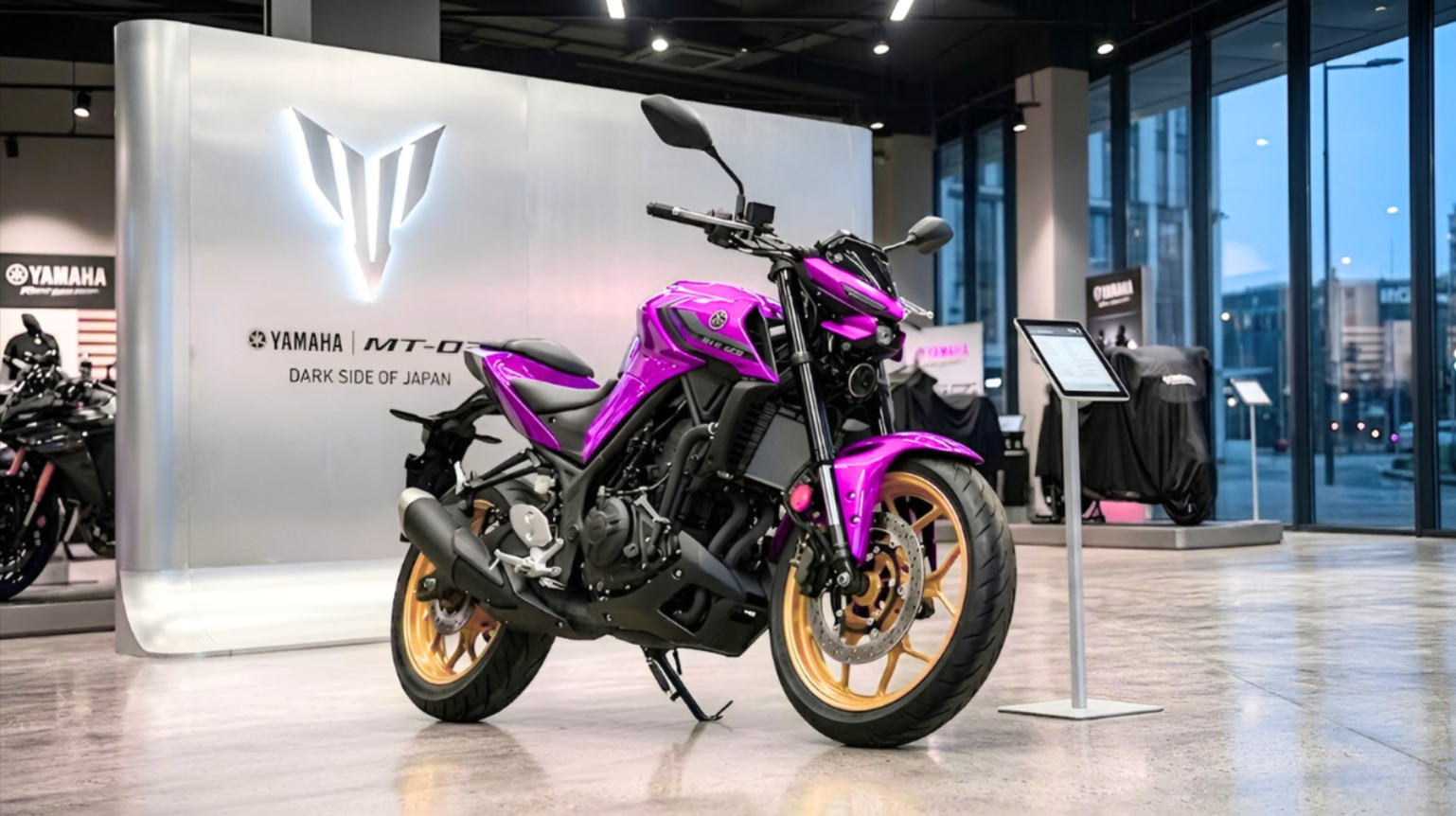

The 2026 Yamaha MT-03 looks set to stay true to what has always made this bike likable in the first place: it’s sharp, light, approachable, and just aggressive enough to feel exciting without turning into a handful. In a market where entry-level performance bikes are getting more serious every year, that balance matters. Not every rider wants a machine that feels like it’s constantly begging to be thrashed. Some just want a stylish streetfighter that works in the real world, handles city chaos well, and still puts a grin on their face when the road opens up.
That’s where the MT-03 has usually done its best work. And if the 2026 version follows the expected path, it could become an even more polished everyday naked bike.
Sharper Styling
Yamaha’s MT lineup has never exactly been subtle, and the MT-03 is expected to keep leaning into that bold streetfighter identity. The “Dark Side of Japan” design language may sound like marketing drama, sure, but visually it does give the bike a distinct personality. It’s not trying to look elegant. It’s trying to look tough, compact, and ready to dart through traffic like it owns the lane.
For 2026, the MT-03 is expected to get sharper tank extensions, a revised LED headlamp setup, and slightly more muscular detailing around the bodywork. Those updates may not completely reinvent the motorcycle, but they should help keep it fresh in a class where styling often plays a huge role in buying decisions.
And honestly, that matters a lot with smaller naked bikes. Buyers in this segment usually want something that feels exciting even when it’s parked. The MT-03 has generally nailed that urban, aggressive vibe, and the next version seems likely to keep that energy intact.
A Parallel-Twin
At the heart of the MT-03, the expected 321cc liquid-cooled parallel-twin engine should continue unchanged in its basic form. That’s not a bad thing. In fact, it’s probably the smartest move Yamaha can make.
This engine has long been appreciated for being smooth, friendly, and flexible. It doesn’t intimidate new riders, but it also doesn’t bore more experienced ones who want a lightweight motorcycle for commuting or weekend rides. There’s enough mid-range punch to keep things lively, and the delivery is usually predictable in a way that builds confidence.
No official word points to a major overhaul, so any updates would likely focus on minor refinements. Better throttle response, smoother fueling, or emissions-related tweaks are all possible. But until Yamaha confirms anything, those remain expectations rather than fixed facts.
That said, the core formula still works. The MT-03 doesn’t need crazy horsepower numbers to be fun. It just needs to feel responsive, manageable, and alive. That’s really its lane.
Key Expected Details at a Glance
| Feature | Expected Details |
|---|---|
| Engine | 321cc liquid-cooled parallel-twin |
| Bike Type | Lightweight naked streetfighter |
| Braking | Disc brakes with dual-channel ABS |
| Lighting | Full LED lighting expected |
| Instrument Cluster | Digital display, possible connectivity |
| Seating | Two-rider stepped seat |
| Mileage | Around 25–30 km/l expected |
| Positioning | Entry-level premium naked bike |
That table sums up the broad picture, but the appeal of the MT-03 goes beyond simple numbers. This bike has always been about usability with attitude.
Mileage
Fuel efficiency is one of those things that doesn’t get flashy headlines, but for a bike like this, it matters a lot. The MT-03 is expected to remain practical enough for regular use, with real-world mileage likely hovering in the 25–30 km/l range under mixed riding conditions.
That’s a reasonable figure for a performance-oriented 300cc-class bike. It means the MT-03 can still play the role of a weekday commuter without punishing the owner at the fuel station. And that’s a big part of its charm. It’s sporty, yes, but not silly. You can actually live with it.
Of course, mileage always depends on riding style, traffic, road conditions, and how enthusiastic the throttle hand gets. And let’s be honest, on a bike that looks like this, restraint is not always guaranteed.
Light, Quick and Easy to Enjoy
One of the biggest strengths of the MT-03 has always been rideability. It’s quick enough to feel spirited, but light enough to stay unintimidating. That makes it especially attractive to newer riders, shorter riders, and anyone who just wants a bike that feels manageable in everyday use.
For 2026, Yamaha is expected to preserve that easygoing performance character. The bike should still feel agile in city traffic, easy to flick through gaps, and stable enough for occasional highway runs. That’s a pretty useful mix. Not every small-capacity motorcycle gets that balance right.
Suspension improvements are rumored or at least commonly expected, especially if Yamaha wants to address comfort feedback from earlier models. A slightly more settled ride over broken roads or better damping over rough surfaces would go a long way. Still, those updates haven’t been officially confirmed, so they sit in the “possible, but not guaranteed” category for now.
Tech Upgrade
This is where things get interesting. Entry-level performance bikes are no longer bare-bones the way they used to be. Buyers now expect more than just ABS and a digital speedo. They want useful tech, especially when rivals are adding connected displays and rider-focused electronics.
The 2026 MT-03 may receive an updated instrument cluster with smartphone connectivity, which could open the door to call alerts, ride data, and maybe even basic navigation prompts. If Yamaha includes that, it would make the bike feel much more current without overcomplicating the riding experience.
Other likely carryovers or expected features include LED lighting and a slipper clutch. Traction control is also being talked about as a possible addition, though again, nothing official confirms it yet. Still, that kind of upgrade would make sense given how competitive this category has become.
The key is not loading the bike with gimmicks. The MT-03 works best when the tech feels helpful rather than intrusive.
Braking and Safety
Dual-channel ABS is expected to remain standard, and that’s exactly as it should be. For a bike aimed at urban riders and newer enthusiasts, predictable braking support is non-negotiable now.
Disc brakes at both ends should continue to provide solid stopping power, and there’s a chance Yamaha may fine-tune braking feel or calibration for 2026. Additional rider aids, such as traction control, could appear depending on market and trim strategy, but at this stage that’s still speculative.

In practical terms, the MT-03’s safety setup seems likely to remain clean and sensible. Enough electronic support to inspire confidence, but not so much that the bike loses its raw, rider-friendly nature.
Comfort
This is another area where the MT-03 tends to make a lot of sense. The upright handlebar, manageable seat height, and neutral footpeg position usually create a riding posture that works well for commuting and casual weekend rides.
That ergonomic friendliness is one of the reasons the bike has broad appeal. It doesn’t demand too much from the rider physically. You don’t need to be a gym freak or a track junkie to enjoy it. You just get on and go.
Minor improvements to seat cushioning or overall rider comfort may arrive for 2026, particularly if Yamaha wants to make the bike more long-distance friendly. But even in its expected current form, the MT-03 should remain a comfortable enough machine for short-to-medium runs with very little drama.
The pillion seat, though, is likely to stay more of a practical extra than a true touring throne. Fine for short rides. Less ideal for all-day two-up travel.
Where It Sits in the Market
The MT-03 faces serious competition from motorcycles like the KTM 390 Duke and BMW G 310 R, both of which bring their own strengths to the table. The KTM often wins attention with aggressive performance and feature density. The BMW leans on brand value and urban cool. The Yamaha’s edge tends to be its smoothness, accessibility, and overall everyday balance.
That could remain its strongest selling point in 2026. It may not be the wildest option in the class, but it often feels like one of the easiest to live with. And for a lot of riders, that’s more important than bragging rights on a spec sheet.

Pricing will be crucial, of course. If Yamaha keeps the MT-03 competitive while adding even a few meaningful updates, it should remain a very attractive choice in the entry-level premium naked segment.
At Last
The 2026 Yamaha MT-03 doesn’t need to become something radically different to stay relevant. It just needs to sharpen what already works. A punchy but friendly twin-cylinder engine, lightweight handling, aggressive naked-bike styling, and enough comfort for daily use, that’s already a solid foundation.
If Yamaha adds a little more tech, tidies up the ride quality, and keeps pricing sensible, the MT-03 could remain one of the smartest choices for riders who want a streetfighter that feels exciting without becoming exhausting. In other words, a bike that’s fun on Monday as much as it is on Sunday. And that, frankly, is a rare thing.
What engine is expected in the 2026 Yamaha MT-03?
The 2026 Yamaha MT-03 is expected to continue with a 321cc liquid-cooled parallel-twin engine known for smooth performance and usable mid-range power.
Is the 2026 Yamaha MT-03 good for beginners?
Yes, the MT-03 is widely seen as beginner-friendly because of its manageable power, light handling, upright ergonomics, and everyday practicality.
What mileage can the 2026 MT-03 deliver?
Official mileage is not confirmed, but real-world efficiency is expected to remain around 25–30 km/l under mixed riding conditions.
Will the 2026 Yamaha MT-03 get new technology features?
It may receive an updated digital instrument cluster with smartphone connectivity, while features like traction control remain possible but unconfirmed.
Who are the main rivals of the 2026 Yamaha MT-03?
Its expected rivals include the KTM 390 Duke and BMW G 310 R in the entry-level premium naked motorcycle segment.
