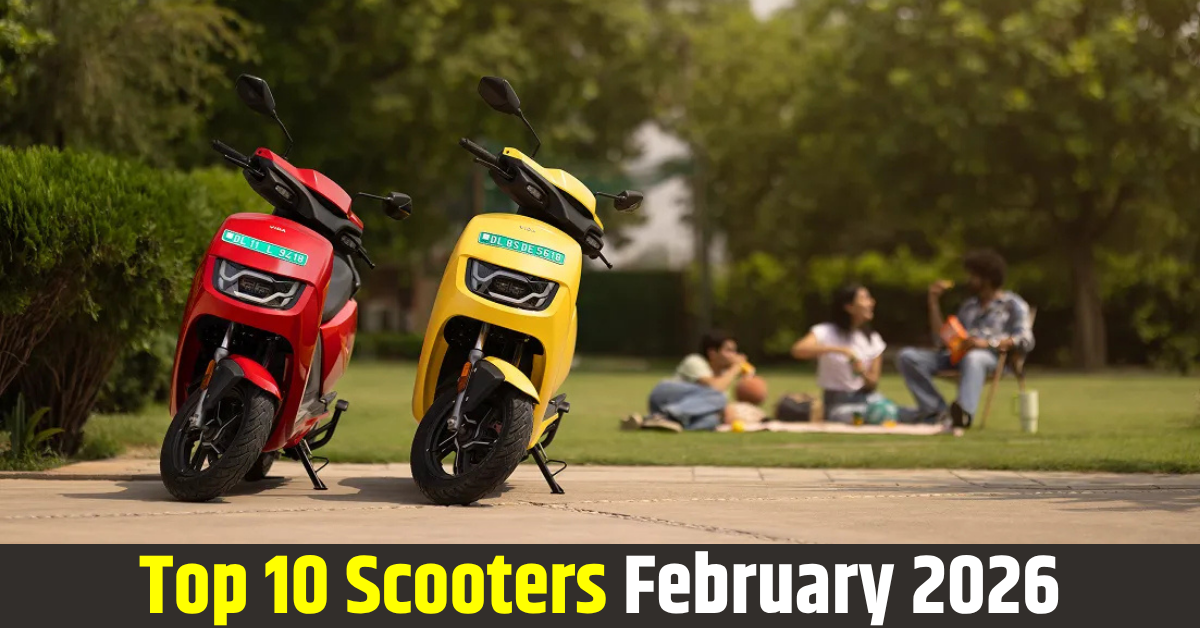

February usually doesn’t scream “record-breaking” for auto sales, but 2026 clearly didn’t get that memo. Scooter demand in India just went full throttle, and the top 10 models together clocked a hefty 6.51 lakh units up a sharp 42% from last year. Walk into any dealership right now, and you’ll probably hear the same thing: “Waiting period hai, sir.” The momentum is real, and it’s broad-based.
Activa Still Playing in a Different League
Let’s be honest—this isn’t even a rivalry at the top anymore. Honda Activa continues to dominate like it’s on autopilot. With 2,54,449 units sold in February 2026, it’s not just leading—it’s lapping the field.
That’s a 46.23% jump over last year, and more importantly, it sold nearly double the units of the second-placed scooter. Think about that for a second. In a market filled with options—from budget commuters to electric upstarts—Activa still feels like the default answer for most households.
There’s something almost cultural about it now. First job? Activa. Family scooter? Activa. Need something fuss-free? You already know.
Jupiter and Access Hold Their Ground
TVS Jupiter has quietly cemented itself as the most consistent challenger. It may not grab headlines like EVs or sporty scooters, but it’s dependable—and buyers clearly value that.
With 1,27,089 units and a 22.7% growth rate, Jupiter comfortably sits in second place. It’s not closing the gap with Activa, but it’s also not letting anyone else get close.
Suzuki Access, meanwhile, continues its steady run in third. It sold 70,137 units, growing nearly 19% year-on-year. The Access formula hasn’t changed much over the years—refined engine, smooth ride, solid mileage—and maybe that’s exactly why it works.
Electric Scooters Are No Longer a Sideshow
Here’s where things start getting interesting. The EV wave isn’t just hype anymore—it’s showing up in hard numbers.
TVS iQube grabbed fourth place with 38,054 units, jumping over 61% compared to last year. That’s not incremental growth—that’s acceleration. Bajaj Chetak followed in fifth with 28,004 units, growing a respectable 31.85%.
Between the two, it’s clear that legacy brands are finally figuring out electric mobility. And buyers? They’re warming up faster than expected.

You can feel the shift on the ground too—more charging points, more visibility, and fewer “range anxiety” conversations than before.
Sporty and Youth Scooters Keep the Energy High
Not everyone wants a calm, practical ride. Some want a bit of attitude—and TVS Ntorq delivers exactly that.
With 31,955 units and over 52% growth, Ntorq continues to lead the sporty scooter space. It’s loud (in a good way), tech-loaded, and clearly resonates with younger riders.
Honda Dio also had a standout month, jumping 76% to 28,227 units. It’s been around for years, but the design refresh and brand recall seem to be working in its favor again.
The Surprise Climbers
Every month has a few unexpected movers, and February had more than one.
Hero Destini nearly doubled its sales—up a massive 89.47% to 27,369 units. That’s the kind of jump that makes you look twice at the data.
Yamaha RayZR wasn’t far behind, growing 61.26% to 22,593 units. Yamaha’s lightweight, sporty positioning seems to be clicking with urban buyers.
And then there’s Suzuki Burgman. Sitting at the bottom of the top 10, yes—but also posting the highest growth rate of all: a whopping 112.84%. From 10,978 units last year to 23,366 now, that’s more than doubling its numbers.
Premium scooters are slowly carving out their own space.

Top 10 Scooters – February 2026 Sales Snapshot
| Rank | Scooter Model | Feb 2026 Sales | Feb 2025 Sales | YoY Growth |
|---|---|---|---|---|
| 1 | Honda Activa | 2,54,449 | 1,74,009 | 46.23% |
| 2 | TVS Jupiter | 1,27,089 | 1,03,576 | 22.70% |
| 3 | Suzuki Access | 70,137 | 59,039 | 18.80% |
| 4 | TVS iQube | 38,054 | 23,581 | 61.38% |
| 5 | Bajaj Chetak | 28,004 | 21,240 | 31.85% |
| 6 | TVS Ntorq | 31,955 | 20,992 | 52.22% |
| 7 | Honda Dio | 28,227 | 16,028 | 76.11% |
| 8 | Hero Destini | 27,369 | 14,445 | 89.47% |
| 9 | Yamaha RayZR | 22,593 | 14,010 | 61.26% |
| 10 | Suzuki Burgman | 23,366 | 10,978 | 112.84% |
What’s Driving This Scooter Boom?
It’s not just one factor—it’s a mix.
Fuel prices are still nudging people toward efficient two-wheelers. Urban traffic isn’t getting any better, making scooters the most practical choice for daily commutes. And then there’s financing—easier EMIs are pulling in first-time buyers.
But the biggest shift? Choice.
You’ve got petrol, electric, sporty, premium—something for literally every type of rider now. Ten years ago, this segment was far more predictable. Today, it feels… dynamic.
TVS Emerges as a Quiet Powerhouse
While Honda grabs the spotlight, TVS is building serious volume across categories.
Jupiter, iQube, and Ntorq together pushed the brand close to the 2 lakh monthly mark. That’s not a fluke—that’s strategy. Cover every segment, and you don’t depend on just one winner.
And honestly, it’s working.
So, Where Does This Leave the Market?
If February is anything to go by, 2026 could be a defining year for scooters in India.
Activa will likely continue its dominance—no surprises there. But the real story is underneath: EVs gaining ground, premium scooters expanding, and mid-segment models fighting harder than ever.

The gap between “just a commuter” and “something more” is shrinking. Buyers are expecting better features, design, and tech—even in entry-level models.
And manufacturers? They’ve clearly got the message.
FAQs
Which scooter sold the most in February 2026?
Honda Activa topped the list with 2,54,449 units sold.
Which scooter had the highest growth rate?
Suzuki Burgman recorded the highest YoY growth at 112.84%.
Are electric scooters gaining popularity in India?
Yes, models like TVS iQube and Bajaj Chetak showed strong growth, indicating rising adoption.
Which brand performed best overall?
Honda leads with Activa, but TVS showed strong multi-model performance across segments.
Is the scooter market growing in 2026?
Yes, the segment grew by over 42% year-on-year in February 2026.
