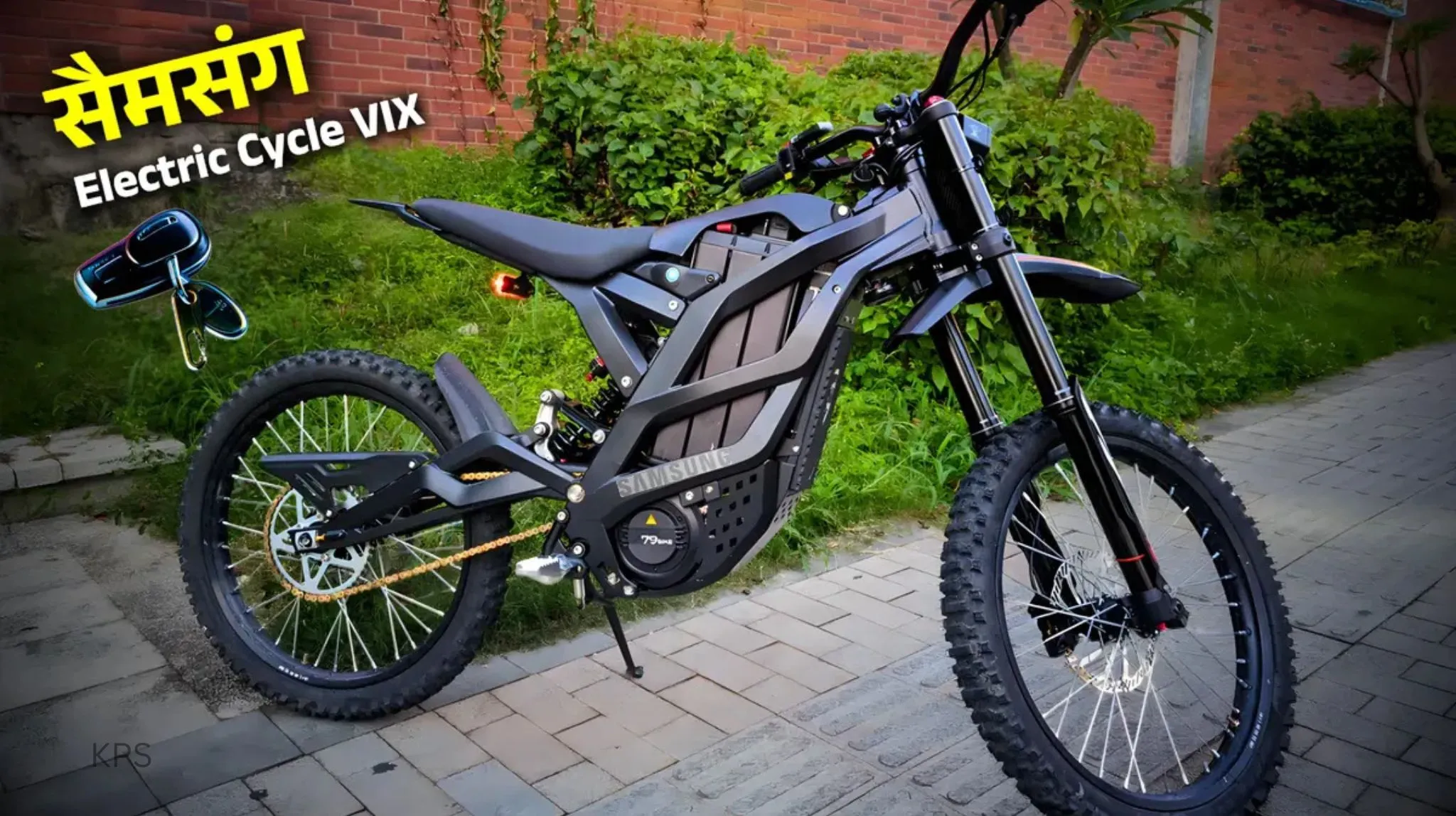

Samsung E-Cycle Launched: The electric mobility market is evolving faster than ever, and Samsung’s latest move has caught everyone’s attention. The brand has introduced its all-new Samsung E-Cycle, targeting budget-conscious users who want performance, efficiency, and smart features in one package. With an impressive claimed range of 145KM and a highly attractive ₹3,999 down payment option, this electric cycle is being positioned as a practical alternative to fuel-based commuting. It is designed for daily riders who want savings without compromising on style or technology.
A Tech Giant
Samsung launching an electric cycle isn’t just about adding another product to its lineup. It’s a signal. The company seems to be eyeing everyday transportation—the kind that doesn’t make headlines but defines how millions move daily.
Think about it. Rising fuel prices, traffic congestion, and a growing push toward sustainability have created a gap. Not everyone wants—or can afford—an electric scooter or car. That’s where something like an E-Cycle fits in: low cost, low maintenance, and just enough tech to feel modern.
This move places Samsung in direct conversation with urban India’s most practical users—students, gig workers, office commuters. The people who care less about “top speed” and more about “kitna bachega mahine mein?”
The 145KM Range
On paper, that’s… impressive. Almost suspiciously impressive for an electric cycle in the budget segment. Most e-cycles in India typically offer anywhere between 40 to 80 km, depending on usage and assist levels.
So if Samsung actually delivers anywhere close to this number in real-world conditions, it changes expectations overnight.
Here’s how it compares conceptually:
| Feature | Typical E-Cycle | Samsung E-Cycle (Claimed) |
|---|---|---|
| Range | 40–80 KM | Up to 145 KM |
| Charging Frequency | Every 1–2 days | Possibly 3–5 days |
| Daily Convenience | Moderate | High |
| Range Anxiety | Present | Minimal (if claim holds) |
Of course, experienced riders know the drill—real-world range depends on terrain, rider weight, assist mode, and traffic conditions. Still, even a conservative 100–110 km would be a strong showing.
₹3,999 Down Payment
If the range grabs attention, the pricing strategy pulls people in.
A ₹3,999 down payment is… let’s be honest, it’s a psychological masterstroke. It makes the product feel instantly accessible. You’re no longer thinking in terms of total cost—you’re thinking, “I can start using this today.”
This is classic consumer financing logic, but applied smartly to a segment that thrives on affordability.
For students or early earners, this lowers the entry barrier dramatically. Instead of saving up ₹30,000–₹50,000 upfront (typical for e-cycles), they can spread the cost out.
And in a country where monthly budgeting matters more than one-time spending, that changes buying behavior.

Smart Features
Samsung isn’t going to make a “dumb” cycle. That much is clear.
The expected digital display—showing speed, battery level, riding modes—brings it closer to scooter territory than a traditional bicycle. Add smartphone connectivity, and suddenly you’re looking at something that behaves more like a gadget than a vehicle.
There’s a subtle shift here. Younger users don’t just want transport—they want an experience. Tracking rides, monitoring battery health, maybe even app-based controls… it all adds to that ecosystem feel Samsung is known for.
Multiple riding modes—Eco, Normal, Power—also give flexibility. Want to conserve battery? Go Eco. Running late? Switch to Power. Simple, practical, effective.
Built for the Reality of Indian Roads
Design-wise, this doesn’t seem like a showpiece. It’s built for actual usage.
A lightweight frame is crucial—especially when you’re navigating traffic or carrying it up a flight of stairs (yes, that still happens). At the same time, durability matters because Indian roads aren’t forgiving.
The riding posture appears relaxed, which is important. Nobody wants to arrive at work already exhausted. And for longer rides, comfort becomes a dealbreaker.
Visually, it sticks to a clean, modern aesthetic. Not overly flashy, not too basic either. That balance works—especially for urban professionals who don’t want something that screams “budget.”
Performance
With an expected motor output in the 250W–400W range, the focus isn’t on speed—it’s on usability.
A top speed of around 25 km/h aligns with regulations, but more importantly, it suits city riding. You’re not racing; you’re commuting.
Pedal assist is where things get interesting. It reduces effort without removing the “cycling” aspect entirely. So you still get light physical activity, but without the exhaustion—kind of like having a constant tailwind.
Acceleration is expected to be smooth rather than aggressive, which is actually a good thing in crowded areas. Control matters more than punch.

Charging
No fancy infrastructure needed here. Plug it into a regular home socket, and you’re good.
A 4–6 hour charging window fits neatly into daily routines. Charge overnight, ride all day—that’s the idea.
This simplicity is underrated. Not everyone has access to EV charging stations, and frankly, they shouldn’t need one for a cycle.
Cost Savings
Here’s where the E-Cycle starts making serious financial sense.
No petrol. Minimal maintenance. Lower servicing costs. Over time, the savings aren’t just noticeable—they’re meaningful.
Let’s put it into perspective:
| Expense Type | Petrol Vehicle | E-Cycle |
|---|---|---|
| Fuel Cost | High (monthly recurring) | Zero |
| Maintenance | Moderate to High | Low |
| Running Cost per KM | Expensive | Very low |
For someone commuting 10–15 km daily, the difference over a year could be significant enough to justify the purchase entirely.
Who Is This Really For?
This isn’t a one-size-fits-all product but it comes close.
Students will like the affordability. Office commuters will appreciate the savings. Delivery workers might see it as a cost-efficient alternative to petrol bikes.
Even fitness enthusiasts get a hybrid benefit—exercise when you want it, assistance when you need it.
It’s rare for a product to hit this many use cases without feeling stretched, but the E-Cycle seems positioned carefully.
Market Impact
If Samsung executes this well, competitors will feel it.

Pricing pressure will increase. Feature expectations will rise. Suddenly, basic e-cycles without smart features might start feeling outdated.
And that’s usually how disruption works—not with noise, but with better value.
Consumers win in the end. More options, better pricing, improved technology.
The Samsung E-Cycle, at least on paper, ticks a lot of the right boxes—affordability, range, smart features, and practicality. The ₹3,999 entry point makes it accessible, while the claimed 145KM range sets expectations high.
Now, everything depends on execution. Real-world performance, battery reliability, after-sales support—those will decide whether this becomes a category leader or just another headline.
But one thing’s clear: the line between “tech company” and “mobility brand” is getting blurrier by the day. And if this trend continues, your next commute might have more in common with your smartphone than you’d expect.
FAQs
What is the claimed range of the Samsung E-Cycle?
The company claims a range of up to 145KM on a single charge, though real-world performance may vary.
Is ₹3,999 the full price of the cycle?
No, it is the starting down payment. The remaining amount is expected to be paid through installments.
Does it require a special charging setup?
No, it can be charged using a standard household socket.
What is the expected top speed?
The E-Cycle is expected to have a top speed of around 25 km/h.
Who should consider buying this E-Cycle?
It is ideal for students, office commuters, delivery workers, and anyone looking for a low-cost, eco-friendly transport option.
